A NEW BLUE PRINT
The forces reshaping tomorrow’s shipyards in the refit sector and the opportunities ahead… by Gemma Harris
Shipyards and refit facilities have always been defined by the fundamentals of maintaining, repairing and upgrading. But today, some of these traditional boundaries have blurred.
The modern yard has become a hub of innovation and problem-solving, prioritising the next generation while tasked with handling one of the most complex eras the superyacht industry has experienced.
Client expectations are rising, new technologies and rapid digitalisation are at the fore, and the marketplace is increasingly sustainability-driven thanks to regulatory and societal pressures. As yachts grow larger, more power-dense and more tech-integrated, refit facilities are under scrutiny to deliver smarter, faster and cleaner.
So, how are shipyards keeping pace? What does it take to refit for tomorrow while honouring the skills and traditions that built the industry? And as innovation, regulation and expectations evolve, what will define the next generation of refits?
ONBOARD explores how the global network of shipyards and refit facilities is adapting to the changing landscape and reshaping what it means to stay competitive today.

TECH-FORWARD, HUMAN-CENTRED
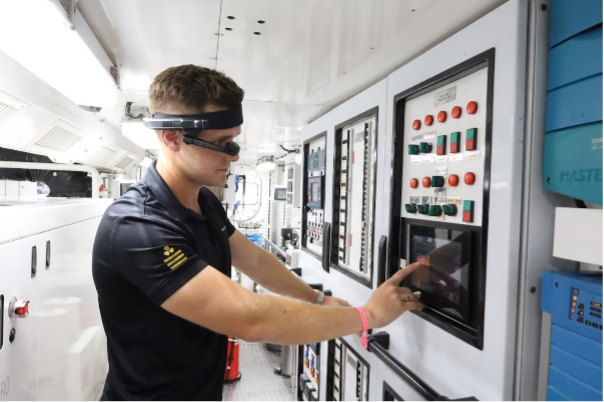
It isn’t a surprise that across the leading refit and new-build hubs, technology is quickly shaking up how things are done, how they operate and how they work to streamline processes, improve quality and give teams the tools to manage increasingly complex projects.
For many, this new technology-forward era begins with data serving as the backbone of yard operations, including digital twins, advanced modelling, and real-time project management software. “At HUISFIT we combine traditional craftsmanship with hard data,” says Stefan Coronel, General Manager at HUISFIT by Royal Huisman.
Coronel adds: “Our engineers work with advanced 2D/3D modelling and precise weight estimates, so we can predict outcomes, de-risk change, and keep schedules realistic. We support this with open-book project administration, fortnightly progress updates and financial reports, giving owners and captains transparent, data-rich decision points throughout the refit.”
Astilleros de Mallorca sees the same shift. “Data-driven systems are helping us move from a reactive approach to a more preventative and predictive way of managing refit and new-build projects,” explains Paul F Grünig, the yard’s Production Director. He adds: “When managing in-house and subcontracted resources, data gives us a clear view of scheduled, emerging and last-minute tasks, real-time resource availability, planning changes, expected scopes and likelihood of job acceptance. The data is there, the real differentiator is how effectively we use it.”

Gianni Paladino, Commercial Director at Lusben, further highlights the onboard perspective: “Data-driven systems are influencing refit projects on two main levels, firstly the onboard lifestyle with smart systems, domotics, lighting control, wellness technologies and the entire ‘hotel’ side of the yacht. Secondly, is the interaction between technology and the yacht itself, with data playing a crucial role in engine rooms, water treatment systems, hybrid propulsion and energy management, enabling yachts to operate more efficiently.” He underscores how their refit projects are enabling upgrades to improve efficiency and onboard experience.
Project management platforms and shared digital environments are also transforming communication. Port Denia’s General Manager, Albert Morell, explains: “A couple of years ago, we introduced PinPoint Works to manage projects, which has helped us structure workflows more clearly, improve transparency and maintain better control over timelines and budgets. It also supports clearer communication with clients.”
These types of cloud-based databases allow owners’ teams, captains and yard departments to exchange drawings, updates and documentation, which in turn helps accelerate decision-making.
As Richard Low, COO at Orams Marine, points out: “Shared database platforms are making it easier to share information between yard and client, allowing a better transfer of information.” Astilleros de Mallorca is currently in this transition of digitalising reporting and communication: “We are already seeing the potential it has for improving data management,” adds Grünig.
Both automation and tools such as 3D scanning, CNC machining, and rapid prototyping have helped yards wanting to reduce bottlenecks and compress project timelines. Yet even as the technological tools improve speed, the yards remain insistent that the human element remains vital.
“Our approach is ‘expertise à la carte’: state-of-the-art tools in the hands of experienced specialists,” comments Coronel. Low agrees: “Technology will always play a part and have pushed our abilities, but ultimately it is still the tradespeople themselves, their skill, knowledge, finesse, and motivation to achieve the highest standards that will continue to define a yard.”

Grünig stresses that with the introduction of various technologies, such as laser alignment systems and CNC machining, the challenge arises when data must be interpreted, judged, and decisions made. He explains: “Technology speeds up execution, but it cannot replace expertise.” Citing the fact that when new tools and technologies are introduced, teams must adapt and evolve. He adds: “We must restructure teams that qualified artisans take on supervisory and controlling roles, and operators handle the equipment that increases productivity and speed.”
Morell agrees: “Technology supports our work, but does not replace craftsmanship. Many tasks – welding, painting, carpentry, bespoke fabrication – still rely entirely on skilled professionals. Technology enhances precision and planning, while execution remains in experts’ hands.”
This thought is also echoed by Paladino, who says: “Technology and craftsmanship are not in conflict; they are highly complementary.” Emphasising that traditional techniques are supported today by advanced technologies that improve precision, safety and quality without replacing the human touch.
The result of technology is a yard where efficiency, accuracy and transparency are all significantly improved. Still, the innovation taking place is most effective when it supports, not supersedes, the industry’s century-old skills and traditions.
WORKFLOW AND WORKFORCE CHALLENGES
As technology accelerates and client expectations rise, shipyards are facing various mounting pressures that innovation alone cannot fix. While tools such as 3D scanning, digital twins, and real-time project platforms are improving accuracy, they can’t fully offset the sector’s most persistent constraints of planning gaps, labour scarcity, long lead times, and supply chain friction.
Across the sector, many bottlenecks remain procedural rather than technical. “The lack of planning and slow decision-making processes are often the biggest bottlenecks. There is often too great an expectation of what can actually be achieved in a given timeframe,” explains Low.
Astilleros de Mallorca identifies similar patterns. Grünig notes that delays often stem from incomplete worklists, schedules based on departure dates rather than defined scopes, and insufficient time for engineering and pre-production. “Anything that can be defined and planned before the yacht arrives significantly reduces delays and cost overruns.” Even contract management can become an obstacle when legal frameworks overshadow technical realities: “The priority should be technical protection – scope, timelines, processes and quality requirements – not just contractual clauses,” he adds.
Supply chain delays continue to impact delivery timelines, particularly for specialised components with long lead times. Coronel sees lead times as one of the sector’s most persistent challenges. “Lead times for specialised components and securing the right slot can be bottlenecks across the sector. We mitigate this with realistic scheduling and project management.”
Workforce availability is also a hurdle and one of the industry’s defining pressures. Demand for skilled labour is outpacing supply across all major shipbuilding hubs. As Low notes: “It is tough to source quality labour required at this top end of the market.” Apprenticeship programmes – both in-house and within subcontractor networks – are now essential to building future capacity.

Port Denia reports similar constraints. “The main challenge is the shortage of highly specialised personnel and subcontractors. Certain tasks require very specific expertise, and availability is limited. We invest in on-the-job training, mentorship and internships with local technical education centres,” says Morell.
Astilleros de Mallorca also faces workforce challenges, despite strong interest from motivated young professionals; attracting and training skilled tradespeople requires long-term investment and structured development pathways. Meanwhile, HUISFIT is taking a proactive approach, expanding its in-house expertise by drawing on the broader Royal Huisman, Rondal, and P&G Yachting ecosystem and investing in its team.
Balancing speed with quality has become a defining tension of modern refit projects. Shorter turnaround times, tighter regulation and higher technical standards all require additional time and oversight, placing even more strain on already stretched resources.
DRIVING AGENDAS FORWARD
Few topics receive as much attention and are scrutinised in the sector as sustainability, and one of the industry’s main sticking points within this is propulsion. The shift toward hybrid propulsion, alternative fuels and more environmentally responsible operations is unmistakable. Interest is growing, though progress and adoption are uneven.
HUISFIT has shown promise in this space, having developed its ‘defined, ultimate hybrid upgrade package’ with headline conversions on Foftein and Juliet. However, retrofits are rarely plug-and-play, as Coronel explains: “Space, weight, integration and regulatory compliance are factors to take into account in existing vessels. These limitations require a creative approach, but often management and many older technical components can be replaced by more modern and smaller units.”
Lusben confirms growing owner interest. “We are seeing a clear and growing interest from owners in hybrid propulsion and alternative energy solutions. There is a strong willingness to explore these systems.” However, Paladino points to challenges with full hybrid conversions and complex pod propulsion systems, which require redesigns and structural re-engineering.
The technical complexity is a worry for many, Morell explains: “Older yachts were not designed to accommodate large battery banks, electric propulsion motors, and the associated power management and cooling systems. Each project must be evaluated case by case.”
While some report owner interest, others see limited uptake for hybrid conversions. Grünig states the uptake in their current and upcoming projects is ‘quite insignificant’. At the same time, Orams has not yet encountered many projects integrating hybrid systems. And Port Denia says the shift toward hybrid is still limited, with most owners prioritising ‘reliability and cost-efficiency’.
Astilleros de Mallorca takes a measured view toward the challenges in integrating hybrid systems into the fleet already on the water. Lucia Mingot, Quality, Innovation and Sustainability Director at the yard, stresses: “The biggest challenge isn’t technical – it’s a change in mindset and willingness from owners. There are viable options, but given how conservative our sector is, the limiting factors are rarely the engineering aspects.”

Portosole shipyard echoes the importance of pragmatism. Site Manager Emiliano Martino explains: “Innovation becomes truly adoptable only when it is mature, standardised and meets the primary needs of owners – preserving and increasing the value of their vessel.”
“Measured steps on retrofits that improve onboard energy management are key, because each existing yacht has its own technical architecture. The focus is on technologies that are already solid and can be integrated – a process of progressive adaptation, not a leap into the void,” adds Martino.
Alongside propulsion, yards are exploring biofuels, cleaner exhaust systems, lithium-battery upgrades, and improved energy management. But for the legacy fleet full compliance in the practicalities of the shift may not always be achievable, but incremental improvements can still deliver gains.
SUSTAINABILITY IN PRACTICE
Beyond the negative impacts of powering the fleet itself, sustainability is multifaceted. It has become a driving force, with pressure to reduce emissions, limit waste and minimise environmental impacts, no longer an option for the industry. Today, sustainability is being integrated across shipyard operations. ESG frameworks are increasingly used to measure progress in energy use, material sourcing, water and waste management and emissions control.
Many yards are investing in infrastructure upgrades. Astilleros de Mallorca has focused on reducing its footprint across the yard by covering the roofs with solar panels, eliminating fossil-fuel boilers, and purchasing electricity from renewable sources. A VOC-reduction plan also ensures that paint applications meet stringent standards. Portosole is also demonstrating how infrastructure investments can deliver tangible results, from electric-powered heavy lifting systems to a port-wide blackwater suction network to remove collection trucks.
When it comes to tracking and reporting, for some, ESG compliance has become a reality. Morell explains: “ESG requirements push us to be more structured and proactive. Compliance and incremental improvements are now part of the daily operations.”

Orams also highlights the value of operational improvements as they work on ‘continuous improvement in reducing environmental impact’. From advanced water-treatment systems to repurposing teak and recycling shrink-wrap plastics, their approach links everyday operations with long-term sustainability goals.
HUISFIT is tracking its sustainability progress through initiatives such as Project Tidal Shift, benchmarking projects against ESG criteria. The yard has invested in efficient processes and compliant facilities, such as temperature – and humidity-controlled EU-compliant paint environments, while also modernising equipment and methods to reduce rework and energy use.
But as Grünig notes, progress is ultimately accelerated when regulation forces the industry’s hand. “Regulation is needed for things to move forward; without it, there is no real change,” he says, pointing to the recent delay in the IMO’s Net Zero framework – a prime example of how postponed timelines can slow momentum.
FUTURE-PROOFING THE FLEET
Retrofitting has become one of the most dynamic segments of the refit world, driven by owners who see the value in revitalising the life of existing yachts – adding new technology or features that weren’t included originally – rather than replacing them. Coronel highlights: “Today’s requests tend to cluster around three areas: firstly, green solutions, secondly, comfort and aesthetics and last but not least, functionality. Our conversion projects, such as Broadwater and Athos, and the full rebuild of Atlantide, show how deep transformations can go.”
Orams sees similar trends, particularly as regulatory pressure increases. Low notes: “Cleaner exhaust systems and lithium batteries are pretty standard now. The challenge is making the new equipment fit an old engine room. Our 3D scanner is perfect for reverse engineering spaces.” The technical feasibility of retrofitting varies by yacht, depending on each design and from an operational standpoint. Morell notes: “Achieving full compliance is rarely straightforward,” and adds, “improvements can often be made via engine or generator replacements, but achieving full compliance may be limited by space or design constraints.”
Today’s retrofit programmes now span hull modifications, automation upgrades, advanced navigation suites, new interior layouts, digital monitoring tools, and enhancements that respect the yacht’s architecture while upgrading performance.
For yards like Astilleros de Mallorca and Portosole, retrofitting is now a strategic priority. It increases charter appeal, improves energy efficiency, and offers a viable alternative to a multi-year new build. But it isn’t without challenges: structural constraints, the availability of specialists, the ability to model and forecast work, and the required project management discipline.

THE FUTURE SHIPYARD
The refit industry is going through a pivotal moment. Between the intricacies of ageing vessels, rising regulatory pressures, supply-chain complexity, and the global shortage of skilled labour, a new type of shipyard is emerging.
Evidently, the next generation of shipyards aims to be data-driven, human-centric, and sustainable. Many yards envision a future in which smart infrastructure, automation, and intelligent systems will optimise logistics, energy management, and operational workflows, supporting human expertise rather than replacing it.
To streamline processes, reduce turnaround times, and manage complex projects, digital tools and AI-driven planning will help. And at the same time, regulatory compliance is becoming central to every decision.
ESG frameworks, energy-efficient operations, and environmental controls are no longer a nice-to-have; they will define competitiveness and excellence.
Despite the rapid rise of technology, tradition in craftsmanship remains at the heart, with skilled specialists continuing to oversee the work, while technology enhances efficiency and planning.
Infrastructure evolution, such as smart yard systems, particularly in energy management, will create additional opportunities for differentiation, enabling facilities to deliver high-quality results while meeting today’s demands. The successful shipyards leading the future will embrace technology, sustainability, and human expertise. And the outcome will be highly coordinated operations capable of delivering smarter, faster, and more sustainable refits, positioning the fleet to thrive and be more future-ready than ever.